
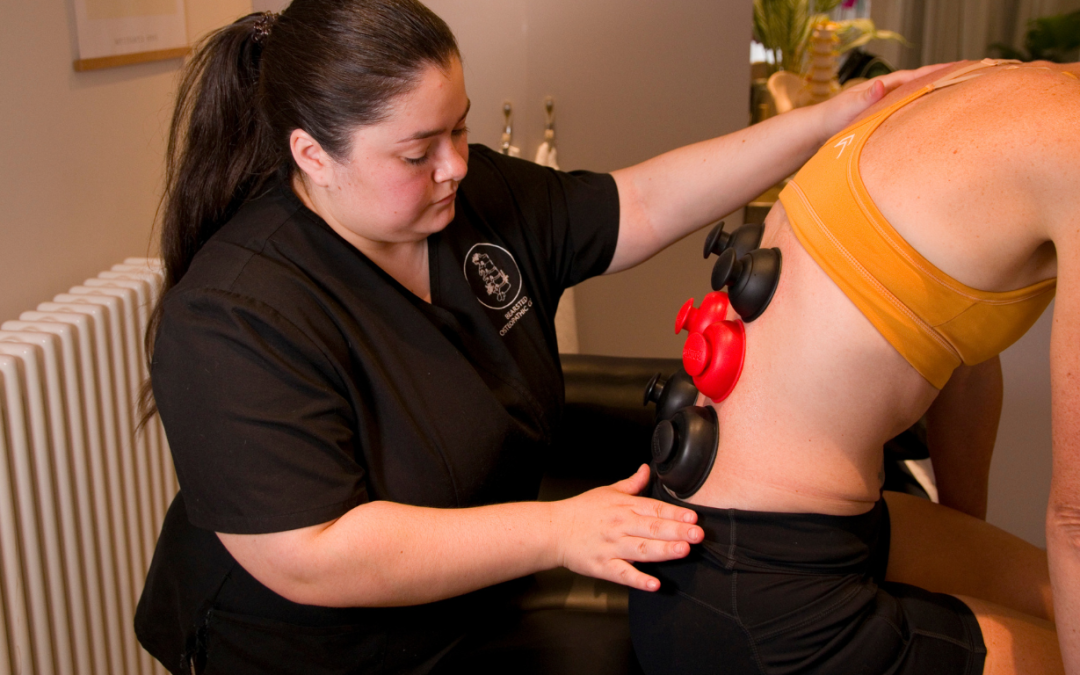
Dry cupping is a soft tissue technique used by some of our team that is increasingly used to complement modern manual therapy and osteopathic care. One of the most common questions patients ask before trying it is:
“Will cupping leave marks on my skin?”
In some cases, yes marks may occur and these marks are a normal response to treatment.
At Bearsted Osteopathic Clinic, we understand that cupping marks can look unfamiliar or even concerning if you have not experienced the treatment before or understand why they occur. So this blog explains what they are and why they happen.
1. What Is Dry Cupping?
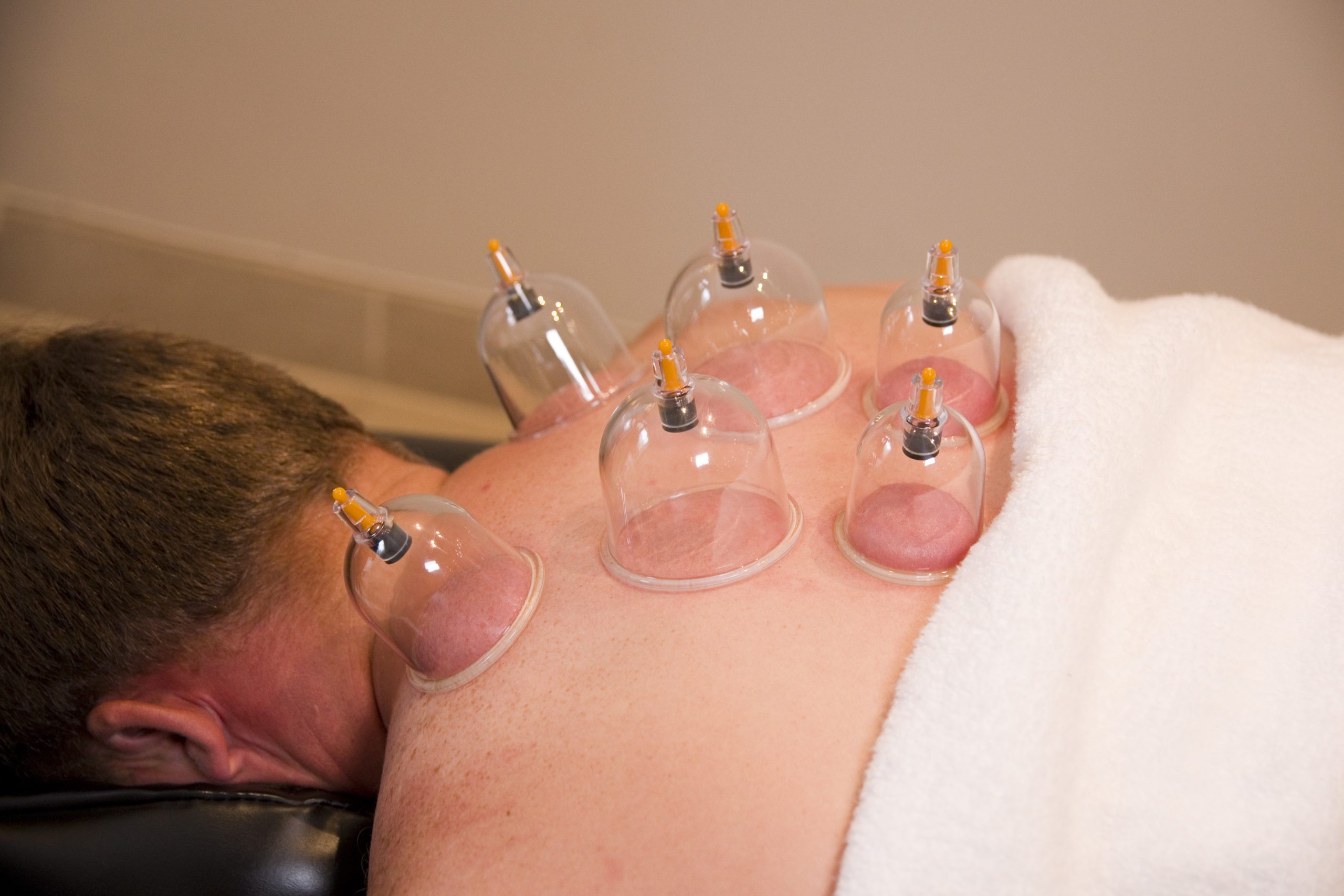
Dry cupping is a technique that uses specially designed cups placed on the skin to create a gentle suction effect to decompress.
This suction produces a lifting or decompressive force on the skin and underlying soft tissue layers, which is different from traditional massage techniques that apply pressure or compression into the tissues.
Within osteopathic care, cupping may be used alongside hands-on treatment and movement-based techniques where clinically appropriate. It is always chosen based on individual assessment, suitability, and with your consent and understanding.
Rather than being used in isolation, cupping is generally one part of a broader, tailored treatment approach aimed at supporting areas of muscular tension, stiffness, or reduced soft tissue mobility.
2. Why Does Dry Cupping Leave Marks?
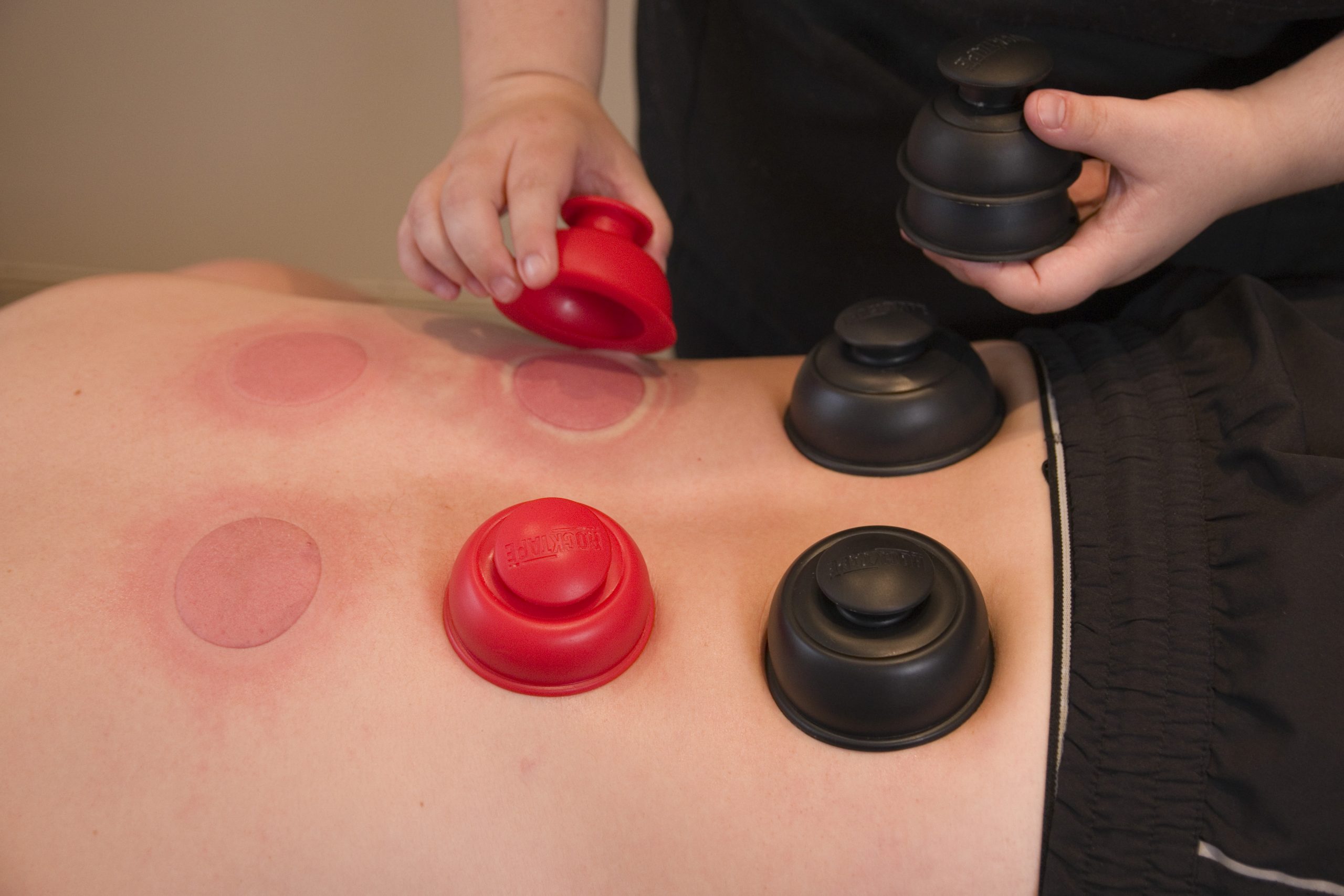
The circular marks sometimes seen after cupping are caused by the suction created by the cups.
This suction creates a gentle lifting effect on the skin and the superficial layers of soft tissue. As this occurs, it temporarily changes the pressure within the small blood vessels (capillaries) close to the skin’s surface.
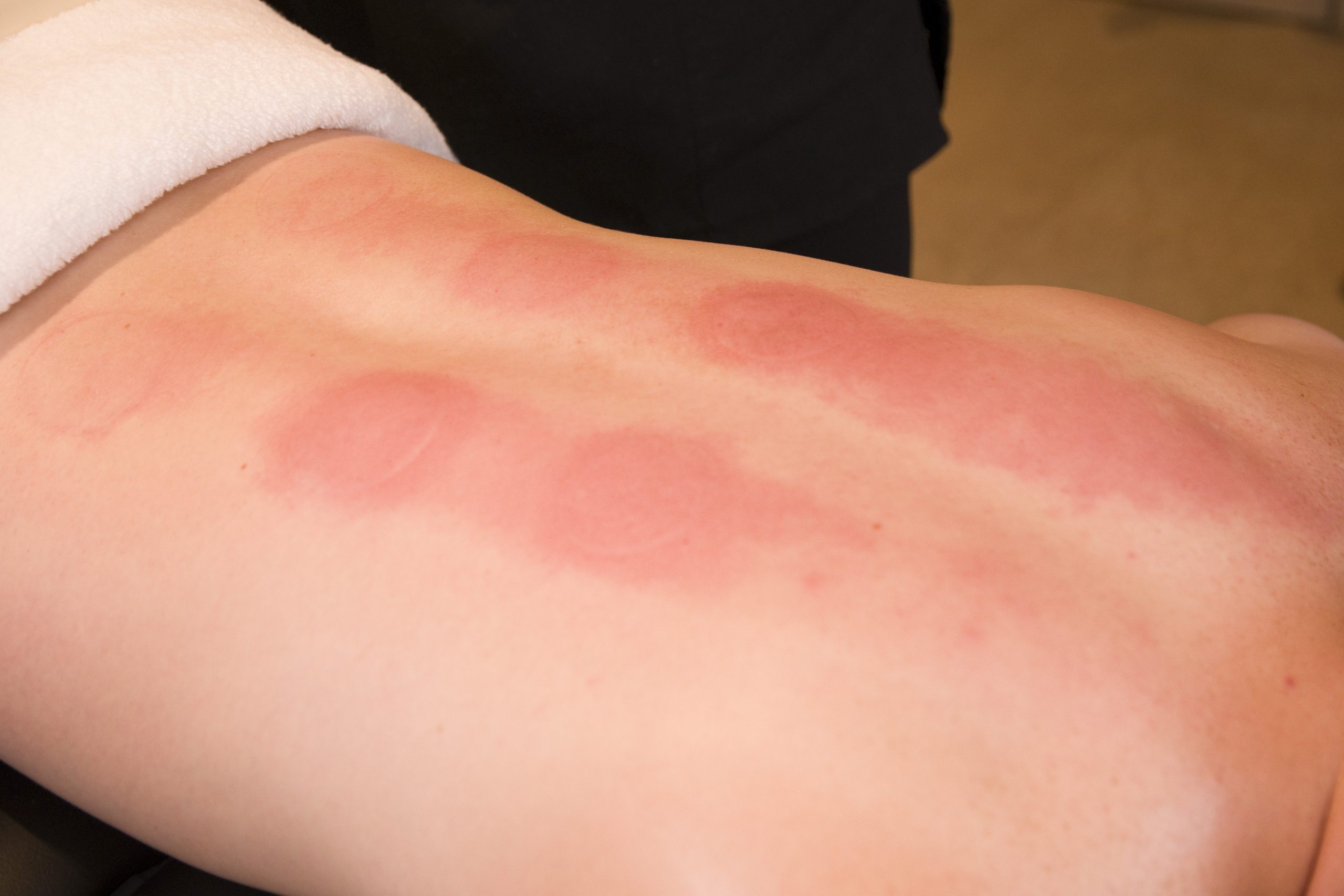
This can lead to a mild, short-term pooling of blood within these superficial tissues, which is why circular marks may appear. These may look red, pink, purple or darker in colour depending on the individual response.
In general, the longer the cups are left in place and the stronger the suction, the more noticeable the markings may be.
These marks are not usually painful and are not the same as bruising caused by direct trauma or impact.
It’s also important to note that the intensity of the marks does not reflect how effective the treatment has been.
Importantly, cupping marks are not caused by “toxins leaving the body”. Instead, they are a natural local response of the skin and superficial blood vessels to pressure change and sensory stimulation.
3. How Does Dry Cupping Work in the Body?
Dry cupping works through a combination of local tissue effects and sensory stimulation of the nervous system.
When a cup is applied, it creates a gentle lifting or decompressive force on the skin and underlying soft tissues. This produces a change in pressure within the superficial layers of the body.
One of the responses to this is a temporary change in local blood flow within the small capillaries close to the skin’s surface. This is what can contribute to the visible redness or marking sometimes seen after treatment.
Alongside these local effects, cupping also creates a strong sensory input to the nervous system. This may influence how the brain interprets signals from the treated area, particularly in relation to discomfort or muscle tension.
From a manual therapy perspective, cupping is sometimes used to help support:
- Local soft tissue circulation responses
- Sensory awareness of an area (proprioception)
- Short-term changes in perceived stiffness or tightness
- Relaxation of areas of muscular tension when used alongside other techniques
These effects are generally temporary and vary between individuals.
It is important to note that cupping is not presented as a treatment that “repairs” tissues directly, but rather as a supportive technique used within a broader osteopathic approach to musculoskeletal care.
4. What Do Cupping Marks Look Like?
The appearance of cupping marks can vary significantly between individuals.
Some people may notice very light markings, while others may see more visible circular patterns.
Factors that may influence this include:
- Skin sensitivity
- Strength and duration of suction
- Hydration levels
- Area being treated
- Individual tissue response
5. Are Cupping Marks a Good Sign?
Cupping marks are simply one possible tissue response to the treatment and are not required for the therapy to be effective.
Some people develop visible marks, while others may not notice any change in the skin at all.
Both responses are completely normal.
6. How Long Do Cupping Marks Last?
In most cases, cupping marks begin to fade within a few days and usually resolve within one to two weeks.
The colour may gradually change as the skin settles and the tissues return to normal.
If you are ever unsure about post-treatment changes, your osteopath will always be happy to advise.
7. Does Dry Cupping Hurt?
Most people describe cupping as a pulling or tight sensation on the skin. It is generally well tolerated, although sensitivity can vary depending on the area being treated and individual comfort levels. The intensity of suction can always be adjusted during treatment. It should never be painful if applied correctly.
8. Safety and Suitability
Dry cupping is not appropriate for everyone, and suitability is always assessed before treatment.
Your osteopath will take a full case history and may adapt or avoid cupping depending on factors such as:
- Skin health or sensitivity
- Medical history
- Medication use
- Circulatory considerations
- Pregnancy or other relevant health factors
At Bearsted Osteopathic Clinic, patient comfort and safety are always the priority, and treatment is tailored to the individual.
Considering Dry Cupping in Bearsted or Maidstone?
At Bearsted Osteopathic Clinic, dry cupping may be used as part of an individualised osteopathic treatment approach where clinically appropriate. Keira, our principal osteopath completed training with Rocktape and uses rock pods alongside traditional cups.
If you are curious about cupping or unsure whether it is appropriate for you, we are always happy to discuss this before booking.
Please contact the clinic to learn more or arrange an appointment.